The Challenges of Re-Upholstering: Leather vs. Velvet Fabric
/Re-upholstering furniture is one of the most effective ways to refresh a space without replacing beloved pieces. But not all fabrics behave the same way once they’re on the worktable. Two of the most popular—and most demanding—choices are leather and velvet. While both offer luxury and durability when done well, each presents its own set of challenges during the re-upholstery process.
Understanding these challenges upfront can save time, money, and frustration.
Working With Leather: Precision Is Everything
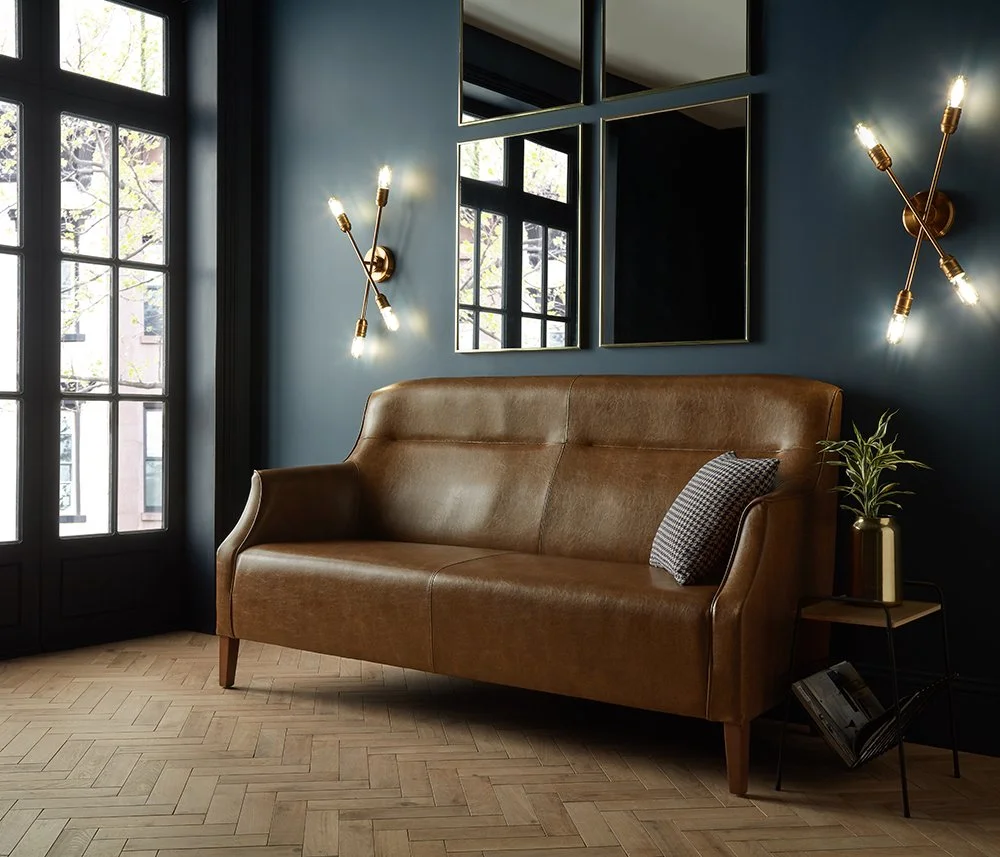
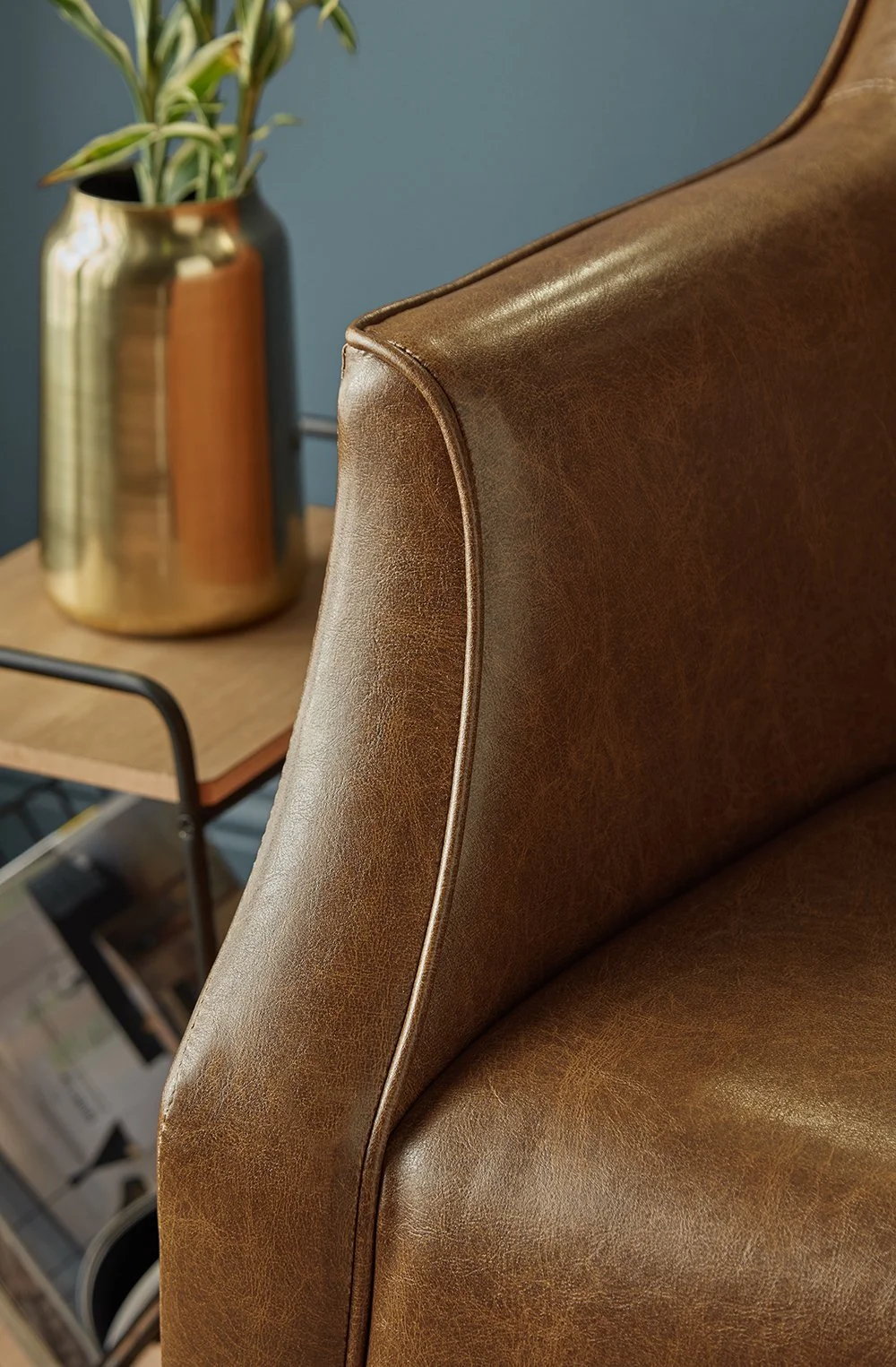
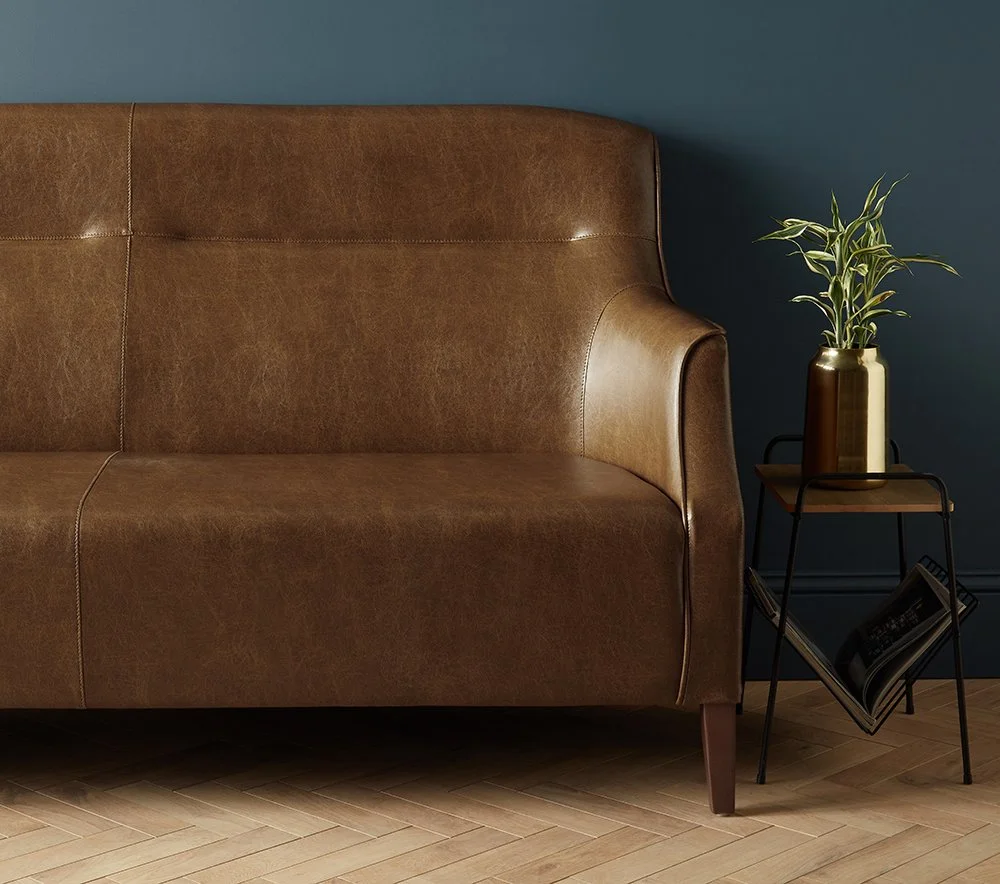
Leather is often chosen for its timeless look, durability, and ability to age beautifully. However, it is one of the least forgiving materials to work with.
1. Mistakes Are Permanent
Unlike woven fabrics, leather cannot be unstitched and re-stitched without leaving visible holes. Every staple, seam, and cut must be placed correctly the first time. This makes leather re-upholstery far less flexible during installation.
2. Limited Yield and Higher Waste Risk
Leather hides are irregularly shaped and may contain scars, stretch marks, or thin areas that can’t be used. Cutting patterns efficiently requires experience, and mistakes can result in significant material loss—especially costly given leather’s price point.
3. Thickness and Strength Challenges
Leather is tougher and thicker than most fabrics. This can strain sewing machines, needles, and hands. Corners, curves, and tufting are particularly difficult, requiring specialized tools and techniques to avoid puckering or uneven tension.
4. Stretch Behavior Is Tricky
Leather stretches, but not always evenly. Over-stretching can cause long-term sagging, while under-stretching can lead to stiffness and poor fit. Achieving the right balance takes skill and patience.
Re-Upholstering With Velvet: Beauty With a Sensitive Side
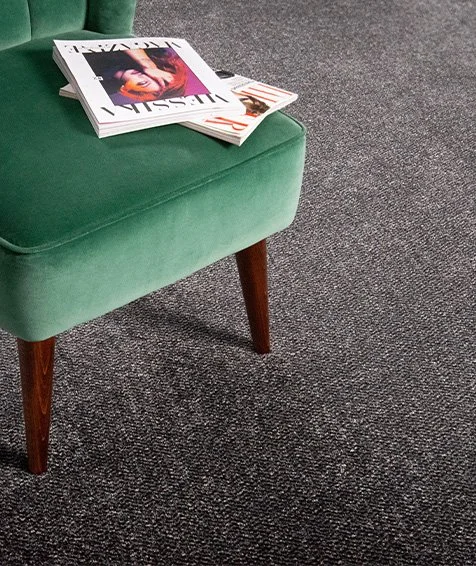
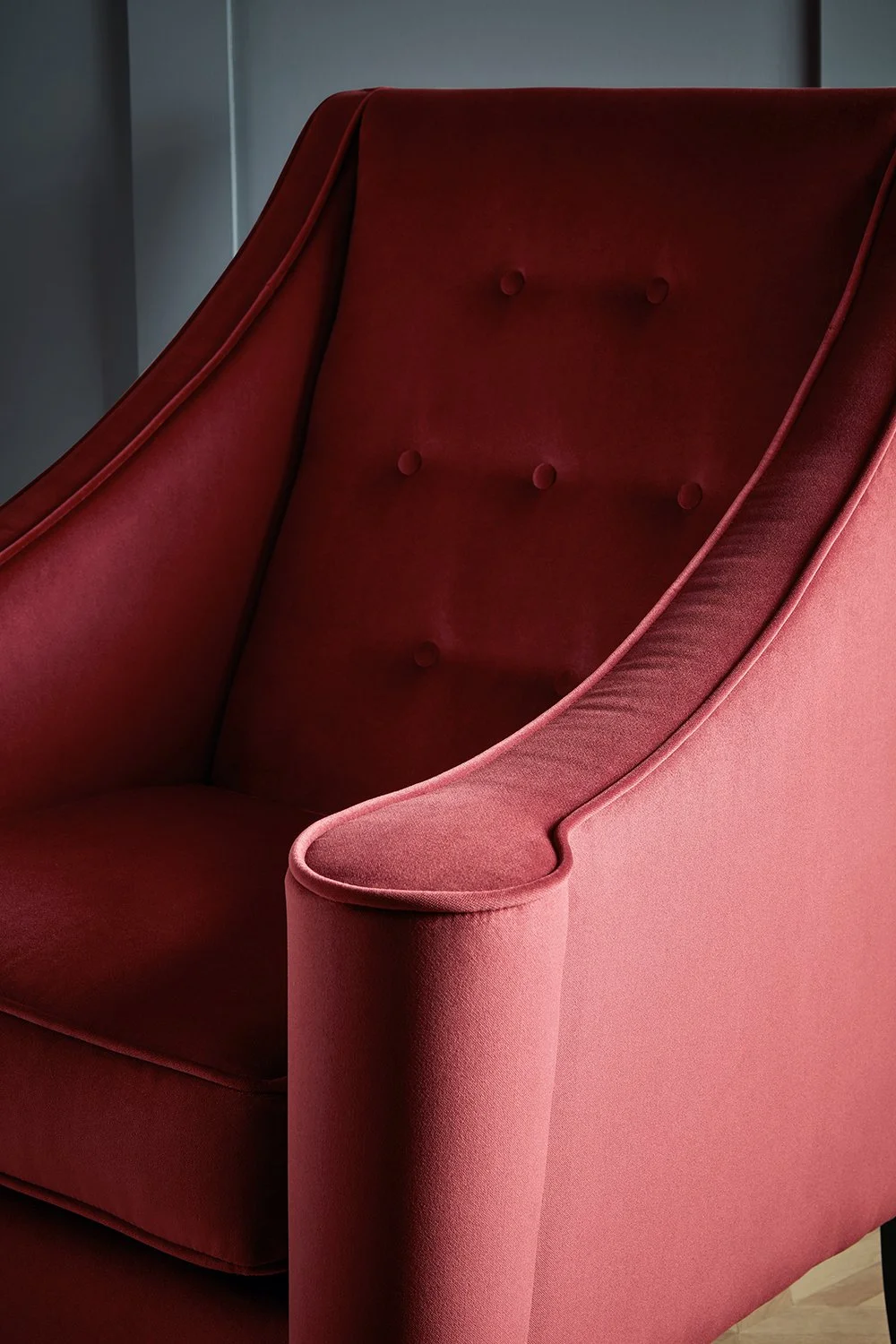
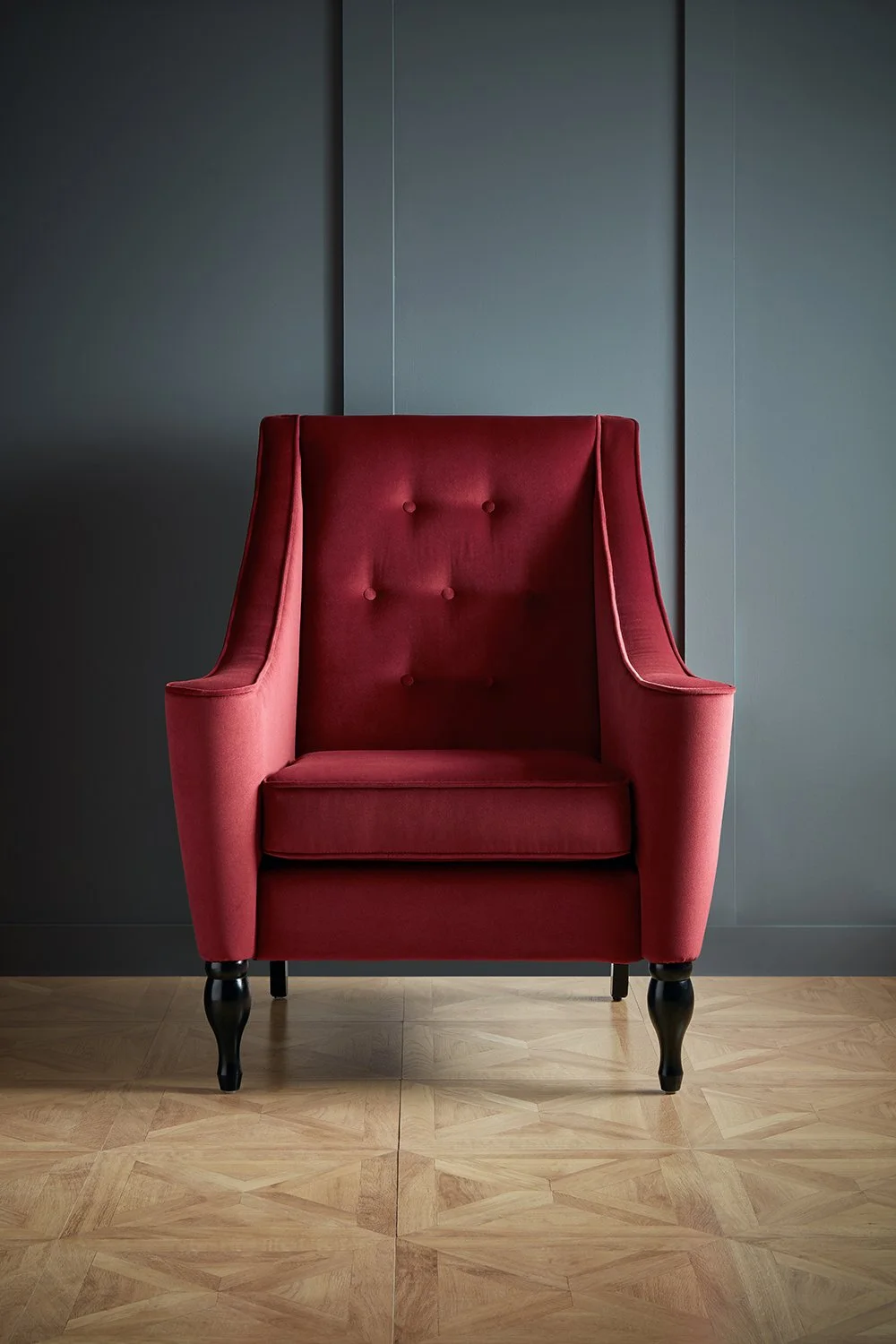
Velvet is loved for its softness, depth of color, and elegant appearance. But beneath that plush surface lies a fabric that demands careful handling.
1. Nap Direction Matters
Velvet has a nap—the direction in which the fibers lie—and it must be consistent across every panel. If pieces are cut or installed in different directions, the finished furniture can appear patchy or mismatched, even when the color is identical.
2. Marks Show Easily
Velvet is prone to pressure marks, bruising, and shading from handling. Staples, hands, tools, or even resting fabric the wrong way can leave visible impressions that are difficult to remove.
3. Slippery During Installation
Velvet tends to shift and slide while being stretched and stapled. Keeping seams straight and patterns aligned can be challenging, especially on complex furniture shapes.
4. Seam and Padding Imperfections Are Visible
Because velvet reflects light differently depending on how it’s brushed, any lump, uneven padding, or crooked seam underneath will be noticeable once the piece is finished. Prep work must be flawless.
Comparing Durability vs. Workability
While both materials are durable in use, they challenge upholsterers in very different ways. Leather demands technical precision and commitment, while velvet requires visual sensitivity and meticulous preparation.
Leather is harder to correct but easier to keep visually consistent once installed.
Velvet allows more flexibility during sewing but exposes even minor flaws in execution.
Cost and Skill Considerations
Leather generally costs more upfront, and mistakes can be expensive. Velvet can vary widely in price, but high-quality velvet also requires skilled handling to avoid a disappointing final result.
In both cases, professional experience makes a significant difference. These are not beginner-friendly materials, and attempting re-upholstery without proper tools or knowledge often leads to wasted fabric and uneven results.
Final Thoughts…
Leather and velvet both bring undeniable character and luxury to re-upholstered furniture—but they demand respect. Leather rewards precision and confidence, while velvet rewards patience and attention to detail.
If you’re choosing between the two, consider not only how the piece will look in your space, but also the complexity of the re-upholstery process itself. The right material paired with the right expertise is what turns a challenging project into a stunning success.
We hope you found this helpful? If you require further assistance,
We’re here for you, at Church Hill Pl. Edinburgh, EH10 4BD but we can travel to you!
Please call 01314473135 or email us enquiry@james-erskine.co.uk.